Help make data accessible to blind and low-vision people
Most data visualizations on the web can’t be read by people who are blind. When the Washington Post published its election maps, screen readers announced them as an incomprehensible string of “image image image.” As institutions increasingly rely on charts and maps to communicate about elections, public health, and the issues that shape our lives, inaccessible visualizations systematically exclude over 7 million Americans with visual disabilities.
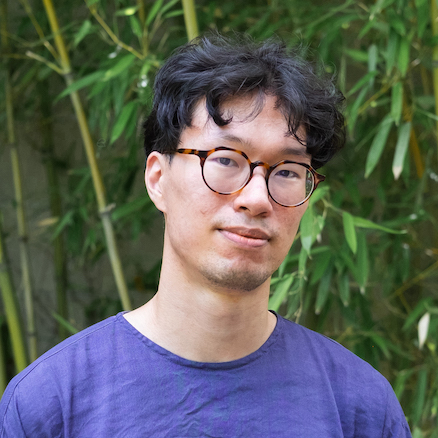
I’m Jonathan Zong, and I lead the Data & Design Group at CU Boulder. Our lab works alongside blind and low-vision collaborators to build open-source assistive technology like Olli and Umwelt. These tools enable screen reader users to explore data visualizations, and create their own charts using sound, text, and visuals together. Our work has been recognized by Forbes 30 Under 30 and has shaped accessibility research at Microsoft, Tableau, and beyond.
“This […] is freedom for the user. Being able to jump around and move in real time as you would with your hand gives you a new way of exploring the information.” — blind screen reader user from one of our studies of Olli
I believe the best way to criticize a technology is to build a better one, in partnership with the people who would benefit. Your support advances our mission to imagine and build better technological futures.
Why now
Federal funding for scientific research is contracting sharply. There are fewer opportunities, and the grants that remain are smaller and harder to win. That squeeze falls hardest on the commitments that make our work distinctive: compensating community partners, sending students to meet them in person, and committing time to early speculative work that can yield new directions.
What your gift supports
- Compensating community collaborators for their time, expertise, and partnership
- Sending students to meet partners in person, attend workshops, and present their research
- Taking on speculative prototypes that can grow into new research directions
- Maintaining the open-source tools we share with the broader research and accessibility communities
Gifts of any size make a difference. A $50 gift compensates a blind collaborator for a user study or co-design session; $250 helps send a student to work with partners in person. Larger gifts let us take on work that would otherwise be out of reach.
The lab’s work ranges from accessible visualization to data ethics and consent—you can browse our projects and publications to find out more.
Unrestricted gifts are made through the University of Colorado Foundation and are 501(c)(3) tax-deductible.
Many employers match charitable gifts through platforms like Benevity—search for “University of Colorado Foundation” to double your impact.
If you’d like to talk first—about the lab’s direction, a project you’d like to support, or giving in honor of someone—please reach out.
Thank you for considering supporting this work. It means a lot.